Hypnosis

Note: This article contains weird and wacky cartoonish descriptions that will make absolutely no sense to you if you don’t follow inanimate transformation, as well as mentions of kinks and subcultures.

So, recently I discovered that someone in my social network happens to be a hypnotherapist, with full credentials as well. This made me pretty excited because I’ve always had an interest in hypnosis.

While I may not be a psychologist, or in the psychology field, Hypnosis has always been interesting to me because trance seems to be one of the few altered states of consciousness that doesn’t involve any alcohol or drugs.

These things are all ready pretty well known as being inhibiting on your decision making abilities. But what if someone else delivered decisions straight to you while you weren’t really fully listening?

The Hypno Process

Disclaimer: this information is powered and compiled through my web searching capabilities. It should not substitute as a reference guide. Its placement here is solely for context to better describe my experiences. Accuracy cannot be guaranteed.

Hypnosis begins with an induction. A process meant to get one into a trance so that actual suggestion can begin. Induction is essentially the whole “you are getting very sleepy” section of the process. Of course, this example is so cliche and assertive that it’s unlikely that anyone would take it seriously alone.

Typically, Induction involves some sort of repetitive process. Something not too repetitive to the point of being drowned out, like a simple word being repeated over and over again. But not too unpredictable to the point of consuming your full attention, like exercising. And to better demonstrate this. One common, yet also unfortunate place that induction can happen is on the road while driving.

While driving for extended periods of time, it’s possible for a motorist to find themselves forgetting that they were driving for that long as they begin to concentrate on driving so intensely that they forget everything else happening. Including being actually aware of what’s happening on the road. In more serious cases (especially in a fatigued state, they can actually fall into a trance or even asleep). Obviously not good.

But why does this happen? Well, ruling out mental states of inebriation or exhaustion. Long, predictable stretches of road and the constant blur of road markings make it easy to start relying less on visual signals and more on just predictions of what’s going to happen next (which unless you approach a sign, Point of Interest, or encounter something unusual, probably isn’t going to be anything interesting).

Once a subject is in a state that they are in a sufficient trance, the core element of hypnosis, suggestion, begins. This is where we actually get to believe into something. This can be the more entertaining suggestions like pretending to be an animal, temporarily forgetting something about yourself, acting in a certain way. Or it can be something more long term like trying to quit a habit.

As with learning anything, repetition is a key to making more substantial improvements. And even if you aren’t with an another hypnotist in person or remote, even listening to the same files can sometimes make a difference.

Unlike what’s shown in popular culture, suggestions aren’t involuntary, or a psychic bullet of sorts that penetrates the self. Suggestions are still processed by the mind in a way that one will snap out of it if they don’t agree with what’s being said. So, suggestions like “you will transfer all the money in your bank account to me” almost certainly isn’t going to result in what you would want it to (and will likely result in a severe breach of trust).

That said, this doesn’t mean that hypnosis can’t change one’s mind about something. Just as any misguided therapist could give advice that may not actually be a good idea, a hypnotist could also impose suggestions that are not a good idea either. And these suggestions could end up causing some serious damage later on if they end up being something that the client ends up taking too seriously.

This can also be problematic as well whenever discussing consent. Someone may think that they truly want something. But the reality is that they didn’t actually want it. They were simply so caught up in the moment that they didn’t realize what they actually wanted. You don’t need to necessarily be inebriated by substance to be unable to make informed decisions.

There also seems to be quite a bit of research as well that memories formed or recalled by hypnosis may not be the most stable. You’ll see this a little later as I try to discuss my experiences. But it kind of makes sense that trying to recall a memory you don’t know in an altered state likely isn’t going to lead to any successful result (It also reminds me of another set of software that’s been making the rounds over the past few years. But that’s not what we are taking about right now).

Brain Training / Basic Braining

I decided that before I actually start being hypnotized by another living being, I should first be familiar with what it exactly feels like to be hypnotized myself. It’s like the

The first time I ever managed to pull this off and actually be Hypnotized, it happened at 2 in the morning while I couldn’t sleep. I had just convinced mom to let me turn the air conditioning on. And while the room began to cool down. I decided to practice self-hypnosis once more by trying out an induction technique I had been practicing.

The process of self-hypnosis is very similar to that of being with a real hypnotist, but this time, you play the role of both yourself and the hypnotist. As the hypnotist, it kind of feels like my own inner voice begins to disassociate with myself. It’s still me talking, but it also doesn’t at the same time. It’s kind of hard to describe.

I looked around the room and mentally described four different things that I could see, four different things that I could hear (nothing was also an acceptable answer), and four different things that I could feel. From the weight of the blanket to the dark sight of my shelf, my eyes quickly began to close. And once they did, I began to tell myself.

Until 2 PM today, you will remain flat, you will remain paper thin, and your muscles will be heavy.

And indeed, that worked. I opened my eyes and I could feel that my body felt a lot thinner.

Obviously, I still felt 3D, but anytime I thought about my limbs, it seemed like I perceived them as being flat. This effect was pretty cool. Though it did tend to minimize whenever I was preoccupied with something else (or something jarring, like someone slamming the door happens). Like when I was cutting the grass.

That said, I likely set up too long of a trigger. What started out pretty fascinating gradually started to turn to “man, when am I gonna be out of this?”. Yet for some reason my mind continued to play along with everything. It was odd, yet perhaps it’s also a sign that I may need to set better scopes.

Once 2 PM rolled around, I could feel the entire suggestion shatter, and I finally felt back to normal.

The session 

Just before me and the hypnotist met. I immediately had the last-second idea of what I wanted, the image that had been lingering in my mind the longest. I had decided that I would be a ball, akin to this picture (Fur Affinity login required). And thus, that’s what we went on.

This was the general process:

I closed my eyes and listened

As they guided me through the general process into trance, I could feel myself beginning to tingle heavily, as it grew heavier throughout the session. Initially beginning with a ball of light that was spreading its warmth from head to toe. My body almost felt like it was disappearing, though it was still there, like I was almost invisible.

Referring back to pop culture for a sec, you know how hypnotized characters tend to have their eyes shown as being a myriad of colors instead of where their pupils would be? That’s exactly what I began to see throughout the process. I’m no stranger to closing my eyes and seeing colors, but they were going all over the place.

They brought me down a staircase, and counting from 12 to 1. They proceeded to describe as I became more malleable and rubbery with each step. I could almost feel myself becoming more and more of a toon, almost like I was becoming increasingly more animated.

They began to do all kinds of things to me

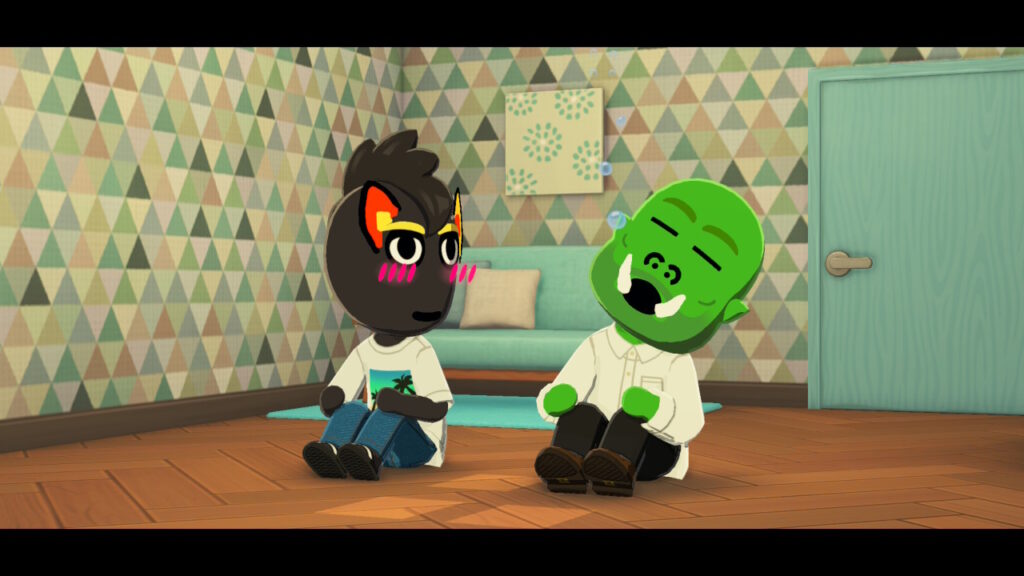
The lion grabbed my wolfself and began compacting it down. Dribbling me on some kind of surface, and also flattening me out and using me as a cushion and took a nap on me. Then, they grabbed me and stretched me out really long. All the way up to 20 ft I think. I kind of lost track of the exact length they described because I could feel the sensations pretty deeply. It was also around this point that most of my anxiety about the session began to expel. 

They gave me a trigger

They said, whenever they mentioned “deep sleep” in any context related to transformation hypnosis and when it was safe to do so, that any mention of that word would send me even further into a trance when we met.

We wrapped up and exited

After counting back up to 5. I woke up at their request and quickly complimented them and described just how much more intense this was compared to my singular experience with hypnosis was. Thanking them for their time, and all the other things that mom has taught me to be doing with others, we disconnected from the call and went our ways.

Immediately, my first instinct was to go straight to notes and start progressing the draft of this post that I had written yesterday before the session.

What could have gone better

I’ll admit, I’m probably not the best at descriptions. And the best way I knew how to describe the whole sensation of flattening to the hypnotist was “squash and stretch”. Which was one of the primary phrases used during the session. There wasn’t anything wrong with it. It just began to feel a little bit odd to hear over and over again. Especially considering it’s also the name to one of the twelve principles of animation.

Of course, the buzziness of my head didn’t go away either. Thoughts still came and go, and I still had to bring myself back to what was going on, though it became easier to focus as time went on.

What was different from my expectations

I referred to this before. But just like, I didn’t leave my seat or anything. Things left the background, and I was really immersed. But it didn’t feel like I left the environment entirely.

Also, being in such a deep trance, it didn’t exactly feel like a deep sleep. But perhaps it’s just a lack of experience.

Where I’ve been continuing

In the days that passed from when I first began working on this draft. I’ve continued working on sharpening my skills of entering and exiting trance, and the process of self-hypnosis as well. It’s been awesome in how something that once took quite a bit of time is now something that I can do almost instantly. It’s still a little difficult to focus on trance, especially when you aren’t with anyone else. But I guess that’s pretty normal to expect.

Going off of the “deep sleep” trigger I put in before. I’ve been able to use that in my own way to get myself into trance. And with myself, I also decided to define “wake up” as a phrase that would immediately pull me out of trance. So now, I don’t even really feel like I need to use inductions with myself too much.

One practice that has especially been enjoyable is “Fractionation”, It’s where you continuously enter and leave trance in constant succession. Each time you wake yourself up, you go back into trance, each time deeper than the last. And it feels like you can go pretty deep this way as well.

More practically, I’ve been able to try and induce my own suggestions to myself in areas that I feel that I need improvement. Uttering the triggers everytime that I feel like I need to start correcting myself. This approach has been a lot more difficult because it has felt like a lot of my suggestions have bounced off my psyche, not to mention the difficulty in forming appropriate phrases (One of my own ones ended up being “Xylophone” because I couldn’t think of anything better). But I am still able to feel them resonate within me, regardless of whether or not.

Now, before I wrap up everything. I’d like to address at least one more thing that might be on a few folks minds. And if it wasn’t on your mind, it certainly was on mine, so I’d like to get it in here.

Hypnokink

Erotic Hypnosis, often referred to as Hypnokink, is primarily what it says on the tin hypnosis. For some, hypnosis as a kink will come as a surprise. For others, it’s likely completely anticipated.

There’s a lot of subcultures here, and there’s an extremely heavy connection with the BDSM scene as well. Which is something that I’ve also been interested in, but it also isn’t really something that I’m going to actively seek out either unless someone were to ask me about it.

Do not get me wrong, I love the idea of BDSM. At least within my own unique way. I even have quite a few personal ideas that I’d love to take on as well. But I just don’t know how I feel about the idea of meeting up with a complete stranger to do something so intimate. The idea of having full-on sexual intercourse is something I feel extremely reserved about compared to a lot of other activities. And while one of the pillars that I know is taken seriously in the community is defining crystal clear boundaries, I also feel afraid of disappointing someone, or worse, creeping them out with what I’m into.

I also just don’t know if I’m in a position that I feel like I can safely engage with the community at large without fear of repercussion if I’m found out or exposed given my current living situation.

One subculture of hypnokink enthusiasts that have stood out to me in particular is the rubber drone scene (drones as in worker bee drones, not quadcopters). It’s a group of rubber laden automaton of all species that perform different tasks, having been hypnotized to have all their former identity wiped, and replaced with stuff like a serial number, and other things that you would typically find on a robot. This is a pretty cool community, especially given it goes into two different things that interest me. Rubber and Hypnosis.

The real thing that scares me about a lot of it is not feeling sure if I’m in the right headspace to know not to take things way too far. For many, I’m assuming, hypnokink experiences are something that they know. But I’m just not sure if I have the knowledge to do something like it. But regardless of how I feel, there’s no rush for me to engage with the group. It’s just something that I would like to do because it seems to be where a large amount of hypnosis fans seem to gather as well. Not just those that are exclusively looking for stage performances or therapy. So if I do decide to engage in the community more someday, you’ll know where to find me.

Closing thoughts

As I’ve written/journaled out this experience, more and more details began to form as I reflected on what happened and thought about it. Much of what I have described, such as me feeling more and more like a toon, weren’t thoughts that were going through my mind when the session happened. But they began to form once I started thinking and reflecting more on what happened.

It begins to feel less like I was having my mind controlled, and more like I just came out of some really, really immersive story. Which isn’t too surprising because it’s pretty easy to be hypnotized by one of those as well. Either way, based on this and what I’ve done with myself, it’s certainly an experience that goes well beyond the initial moment. And can create lingering impressions well into the future.

I often have a lot of daydreams, so it makes me almost wonder if I could better immerse myself into those thoughts from time to time. I should probably be careful though. Lest I end up immersing myself at the wrong time. Overall though, it might be a good idea to first just kick back, relax, and think about how all this actually could integrate into my life.

I’ll admit, I still don’t know a ton about this stuff. But I already know I’m excited. I have been obsessing over these experiences for days leading up to the actual session. And there’s still a ton I’ve yet to learn. This weird sensation of being able to warp my mind into just about anything is exciting, perhaps a little dangerous from time to time depending on the mood. But overall, still something to look at. I still feel like I need to work on my own voice while hypnotizing myself. Perhaps someday, if I truly enjoy what I’m doing, I may even start to record my own hypnosis recordings. If not for myself, then possibly for another niche.

Either way, I’m really excited about everything that happened. And I’m looking forward, if not doing something else with the hypnotist some other time. At the very least, trying to better hone the feelings that I felt and incorporating them into my own life somehow on my own. I’ll probably never get anywhere as close to it on my own, but it’s still worth a try because it was an absolutely pleasant experience.

Physical vs Digital

As the Nintendo Switch 2 nears release in a few weeks, there’s been a growing ire over a new element that Nintendo has decided to introduce to the console.

This is the concept of Game Key Cards:

Game Key Cards get a very large disclaimer at the bottom of the art reminding you that, similar to some of the physical DLC codes, they don’t contain any actual code or game data on the cartridge itself.

Typically, most Nintendo Switch games include all the base data for the game right on the cartridge itself, if there isn’t any updates needed, you can just plug it in and start playing. Of course, you can also use the internal storage or a microSD card to purchase a game on the Nintendo eShop, and download it to your system as well. Using the Virtual Game Card system, you can download software to a device, and transfer the license between systems.

Similar to the concept of Virtual Game Cards (an element that took me an excruciatingly long amount of time to setup to play the Pokémon Scarlet DLC due to having to grab my 2 Switches, update them, convert them to the new system, then link them together). Game Key Cards are meant to represent games that simply contain a license for the actual software. Just like Virtual Game Cards, they don’t contain any actual game data and require an internet connection for download, storage space for storing the actual game, and that the cartridge be inserted into the system for the software to be able to launch and function.

If it sounds familiar, it’s probably because it’s what a majority of Nintendo’s competitors are doing for most titles. The disk contains an excruciatingly small amount of data, and the system downloads the game to the consoles internal storage. The only difference with Nintendo is that they continuing to sell some games as coming completely on cartridge, while others will be sold in a similar fashion to the competition.

Now, despite being similar to what the competition is already doing, the concept of Game Key cards has been controversial with fans. Many vowing they will never purchase a game that uses these.

The purpose of physical games

Despite it all, physical games still have a big purpose. Choosing to avoid digital games entirely is a valid consumer decision. Not everyone would like to handle the trouble of buying a special microSD card for their device, and some just hate the idea of managing storage at all. After all, why worry about having to uninstall games to make room for more when you can just attach and detach games as hot swappable hardware modules? Not to mention the ability to resell games if you wish.

In addition, many cultures favor the gifting of actual, material objects and not something fungible like cash. So physical games sold at department stores like Walmart give the ability for those looking to provide someone with something they like with something they can hold.

In addition, there’s also still the digital divide that plagues us. It may not seem like it depending on where you live, but not everyone in the United States has a solid broadband internet connection. And while Satellite Internet and Wireless Internet Service Providers have made increasing expansions across the more rural areas of the US, they still have their limits. And don’t always work reliably.

Preservation Pitfalls

I’ll admit, I’ve been on the side that doesn’t care as much about video game preservation becoming a challenge. Mainly because fans, given enough time, have always managed to find a way to get through software and do it themselves. Whether that’s through the use of reverse engineering to create a private server, an emulator, or any other hardware that could be used to help keep a collection of games safe and playable. The bigger threats are not being able to download software at all. And, while this is an obvious barrier to the aforementioned preservation (and one of the possible problems with Game Key Cards). An even bigger threat exists in the fact that the companies responsible for developing these systems are also responsible for letting you even run the games in the first place.

One experience that will always resonate with me, and has warped my idea about ownership is as follows:

I used to own an Xbox 360, and I loved Terraria. Owning it across there (as a physical game disk, all the data located on there), and Steam.

One day, we got an Xbox One, a game where you could also purchase an enhanced version of the game for the system. Naturally, being young and not having much money (I had already gotten this game as a birthday gift), I tried inserting it into the Xbox One. Only to be told that the game wasn’t compatible with the system despite the Xbox One being compatible with most Xbox 360 games.

Whether or not this was a problem with the game code not running correctly on the newer Xbox, an intentional restriction in place by Microsoft or Redigit, or something else. None of it matters, because I wasn’t able to play my game. Which leads me to my next part.

Physical Ownership ≠ Digital Ownership

Backwards compatibility is a difficult concept. One that intentionally requires sacrificing making better decisions in software development in favor of allowing already existing games to run. It’s likely one of the reasons the Switch 2 is just an incremental upgrade as opposed to being a transformation like the GameCube to the Wii (which could still run GameCube games through the use of a GameCube controller plugged into the top of the system).

While this has gotten a lot easier thanks to internal emulation and other forms of containerization. It still requires making a few tradeoffs to the overall design of the system. In Nintendo’s case, it’s making the system playable with the hundreds of rapid fire release titles they have released over the course of 8 years. And that’s not including the thousands more released by third parties.

A game being playable forever means nothing if the systems that run it, or enable it to run, don’t exist anymore, or don’t work with the other specific components needed to use the software correctly. I already imagine the Switch 2 will likely have issues with Ring Fit Adventure, Nintendo Labo, and possibly even Mario Kart Live: Home Circuit (though far less likely due to it being software to software rather than hardware design).

This is already ignoring concepts like bit rot. The fact that all physical mediums of computer storage will inevitably degrade to a point of being unreadable. But more likely before that, an executive or accountant will decide that activation isn’t worth keeping around.

When the PlayStation 5 requires an internet connection to setup its attachable disk drive, it really doesn’t mean anything 65 years from now when an unsealed unit is discovered. Long after Sony has decided that the PlayStation 5 activation servers aren’t worth keeping around anymore, or perhaps the PlayStation brand entirely.

While the Nintendo Switch may not have anything like Xbox, where specific games don’t work, or both Xbox and PlayStation, where you need to pay extra for physical games. Nintendo still has the ability to change anything they want about the way that a Nintendo Switch System operates at any time through an over the air update.

They could choose, if they wanted, in a useless attempt to keep track of where games are going (given physical games already could qualify for gold points at one time), they will require an internet connection for all new games inserted into your system.

Sure, you might need to update your system for this to happen. But what if you need to reset your system at some point? Or perhaps another game you want to play needs an update to work correctly? You are going to have to cave in at some point and choose to update your system for things to continue running smoothly. Or just buy another system entirely (in spite of having an already working one, despite being outdated)

Closing Thoughts

Overall, I do think that Physical games are a good option for those who want them. However, they aren’t the saving grace to video game preservation or ownership like some fans try to make them out to be. It feels extremely trivial that someone can state that a game will be Game Key Card only. And then have tons of comments complaining about said release. And indeed, those on the digital divide will certainly have a problem. But we are also going to have a problem with the things we already own if Nintendo decides to change the way that they already make their existing things work as well.

Instead of exclusively focusing on physical games, we should also be focusing on how companies are going to be handling their existing systems, and getting an idea of a timeline of support for a given system. Games don’t work like they did in the 90s, and development companies have managed to pull a lot more rein over their systems than they used to. We have to make sure that they aren’t going to throw us over, or they will do it themselves.

The Audiophile Experience: Loving What You Have

This past year, I’ve been quite obsessed with researching more about audio equipment. And by researching, I mean, mostly purchasing.

Based on what I’ve discovered, audio is a lot more difficult to experience compared to video. They instruct you quite a bit within an IT about how to manage video equipment with all the essentials like HDMI, DVI, VGA, DisplayPort, etc. and then everything related to display technology like In-Plane Switching, Twisted Nematic, and Vertical Alignment, but it really doesn’t feel like they train you much about audio. Perhaps it’s because most office environments just use HDMI for their audio or something like that. But it is kind of frustrating when there’s a whole area out there to explore that you’re just not trained on.

I’m definitely not what you would call a “sound guy“. In fact, most of the audio equipment that I’ve bought this past year barely scratches the surface. The equipment I bought mainly consists of Sonos speakers (which I reviewed in a previous post). And another pair of AirPods. This time, the AirPods Max. I initially had gotten the Sennheiser Momentum 4 Wireless after a recommendation. But I had decided to return them after a few months due to me finding them a little uncomfortable, as well as frustrating to pair with my devices. Specifically, the cut off an audio on Windows, the compression with using the microphone at the same time as the audio. A lot of these are really just major Bluetooth limitations that they don’t have control over. But for a device that showed an MfI label on the box, it really didn’t feel like one.

Bluetooth is surprisingly behind when it comes to audio. Perhaps it’s just a low bitrate, but for something that’s existed for a long time now, it’s still kind of irritating that using a Bluetooth device isn’t as seamless as you would hope.

Although the audio on the AirPods, Max doesn’t sound nearly as good as the Sennheiser headphones I had, they still do sound pretty good. And I would definitely love to get a pair of wired Sennheiser headphones. The only real problem is that I don’t feel like I know enough about audio equipment to feel comfortable purchasing such an expensive pair of wired headphones. I’m worried that it may not fit with a 3.5 mm headphone jack (something that a few of my devices do not have). And I definitely don’t want to have to carry around an amplifier with me everywhere to be able to hear the music.

While Bluetooth may not be a very good experience for headphones when a vendor can only work so much with a specific platform, using a cable is. I find it pretty cool how iOS automatically stops the music if it detects that you’ve unplugged the headphone jack. And of course, it’s pretty easy to switch devices when you’ve got a cable that you can hot swap.

Despite already owning a pair of second generation AirPods Pro, I still feel like I can just buy buying the AirPods Max, despite having far less features due to their older chip, given how well they are canceling out wind (probably due to their design), as well as just being larger with the audio.

I still continue to use the AirPods Pro, though. Mainly because I find them more convenient for more active experiences, and also because I don’t want to get my AirPods Max damaged from sweat. 

Lossless Audio

Audio quality is really difficult to distinguish. At least when it comes to video quality. Just like video, you need a piece of high-end equipment to properly distinguish the difference. But unlike video, it seems like our ears just aren’t as well tuned to spot the differences in sound compared to sight.

The Wikipedia article for audiophile seems to mention that a lot of the ways people try to identify which version of audio sounds better is mostly speculation. And there’s been a lot of pseudoscience in the process.

Lossless audio on the music streaming service I use, Apple Music, is really confusing. Mainly because it isn’t clear which path you need to take or what things you need to buy to listen to it at its best quality without just wasting bandwidth on sound you can’t hear.

Apple Music supports lossless audio in Apple Lossless Audio Codec (ALAC). However, the AirPods Max only support it through a cable (something I don’t have a problem with), and according to some sources, only the newest version of the AirPods Pro with the USB-C case. I’m going to wager that the newest regular AirPods also support it, but I’m not too sure.

None of the devices in the ecosystem support Hi-Res Lossless. But frankly, that’s OK, mainly because I’ve heard that nobody would be able to hear all the frequencies as high and low as it supports. And the option is really just there for marketing purposes. 

Switching between the wireless and wired modes on my headphones, I don’t feel like I can hear a difference. But sometimes I wonder if I listen to them enough, I will. 

Equalizers

Equalizers (EQ) are apparently one of many tools that sound enthusiast have to make their music sound better. The only problem is that I get nervous, touching any of the settings, because I’m worried that I’m going to ruin how the music was supposed to sound.

Part of me knows that this is a pretty nonsense argument. mainly because the way we all hear sound is incredibly subjective and none of us hear things the same way. But I’m just worried that if I adjust the settings too much, I’ll never be able to hear the song the same way again.

My Own Hearing

I have really sensitive hearing, and one of the things that probably blows away a pleasant listening experience is the fact that I set up volume limits where possible to be pretty low.

I have the specifically set up on my phone. Where iOS provide you with the ability to set up a hearing limit.

I do try to care about my ears. Especially given that I will need them for a very long time. 

Conclusion

At the same time that all I do this, I think to myself.

It’s really stupid to be thinking about all these different things when I could just be enjoying the music.

But at the same time, it’s also really nice to have crisp sounding audio. I’ve never been to any concerts or anything like that. So I really don’t have a reference point as to what real life music would sound like. I used to play the piano when I was younger and took lessons about it. But the store I took them were at an organ shop and was mostly keyboards and other electronic instruments. So I can’t really use those experiences either.

A part of me says that I just really don’t have a vision for buying all this stuff. My listening preferences primarily consist of soundtracks, pop music, and sometimes classical and new age (for focusing on workloads). and a lot of the stuff in my library is a mixture of stuff artists that you’ve probably heard, and a selection of ones that you haven’t.

Either way, music is pretty important to me. So I’d like to continue listening to it whether that’s just in the background, or actively paying attention to it. 

Things I Would Like Computers to Do in the Future

Computers can do a lot of things right now, but they still can’t do everything. Here’s just a few things I would like to see them do someday:

Determine which way you are wearing your headphones and adjust accordingly

For 549$, it’s shocking AirPods Max isn’t capable of determining how you’re wearing them.

Perform small actions with just a few sentences

They keep pushing AI everywhere, but it still doesn’t do anything useful aside from give you plausible sounding information shaped sentences you have to really look at to understand if they’re true. When is the day coming that I can ask the computer to perform a multitude of actions on my behalf?

Be designed in ways that aren’t confusing

This one is mostly a free pass. We all know it can’t happen.

Find ways to block out articles online that are just speculation

There are some pretty slow days at some newsroom. So the only real thing left to do is write about something that:

  • Hasn’t happened
  • Is about to happen, but with little known information
  • Isn’t actually going to happen

All of them have one thing in common, they’re designed solely to prey on your endless desire for knowledge fill up an article capable of generating ad revenue.

I’ve seen articles that, while trying to find the answer to a question, just waste 3 paragraphs describing the entire history of a thing. Only to end with “what you are trying to do with the thing isn’t possible”

We already have SponsorBlock, so what’s the holdup with it?

Officially listening to Nintendo soundtracks in my preferred music app

A couple months ago, Nintendo released… A separate music app… to Nintendo switch online subscribers.

While the app does offer some things that rationalize the creation of yet another app on your phone, like hiding spoilers, or setting up extended loops of a specific song, it’s still frustrating that the most Nintendo fans have gotten is a few official CD’s as Japanese imports or now defunct Nintendo power mail orders.

Have a dedicated Wiki Reader app

Many Wiki’s run on MediaWiki. And while some of them might be modified to the point that this would be difficult. There’s still a whole lot more knowledge out there than just on Wikipedia. So why can’t we have one app to view them all? Go from everything in the Nintendo Independent Wiki Alliance, to the Minecraft Wiki, and everywhere else. It would probably be the biggest compendium of knowledge contained in a piece of software ever.

Go back to having more dedicated devices rather than just a single rectangular slab

I think the world would benefit again from having the iPod, Palm, and other consumer electronics now typically considered obsolete now because of the all mighty “smartphone”.

Sure, the world would benefit from spending less on frivolous things, but some also just don’t need all the extra things. Of course, society tilts its head whenever you don’t want something like that.

But in an era where your podcast app can be sunset in favor of wrapping it up with the place you listen to music (See Google Podcasts). It’s nice to have things that don’t change, at least not very much. Not to mention it’s nice to have things that are simple for the elderly that just don’t care if they can access the worlds infomation from their table whenever they like. They’ll still turn to the 5 o’clock news on their TV for that limited digest they’ve been conditioned.

While many TV’s have always had the ability to hook up to a cable or antenna for TV, they’ve usually just been a mere vessel for connecting whatever you please. Now, they all try to be all in one entertainment stations that attempt to replace all the other boxes you would use. Extending all the way onto the remote itself.

I could be wrong about this, but I have a feeling that Apple‘s goal for the iPhone from the start was to replace the iPod . The Music app was even initially called “iPod” then.

Anyway, that’s just a quick list of all my complaints. Not sure how many of these will actually happen in the future.

Cool Websites on the Internet You Should Check Out

There’s a lot of places on the net, and not all of them are cool. Some of them are really big and are bloated with ads and everything, but some of them are smaller, but also have a lot of neat things to check out and a lot of things that you can sink your time into. Here’s just a few of them:

BetaWiki

BetaWiki is a wiki dedicated to documenting the history of various software, with a heavy focus on Microsoft Windows. A solid majority of the content on that site is so entrenched in incredibly technical and arcane knowledge that I would likely never completely understand. But it’s fun to click around on random pages and see what Windows might have looked like at one point. Even if it looks exactly the same as the other builds. Also, sometimes, you encounter cool stuff like this:

A wallpaper used on some windows development builds to discourage leaking confidential data. Needless to say, it was leaked.

Shadowlord Inc.

Like transformation content? Well you might be interested in Shadowlord Inc. a website dedicated to documenting transformation sequences across animated and live action shows and other multimedia.

Founded in 1999, (with a webpage design to match), and monthly updates to the site, there’s quite a bit to explore. And I really gotta hand it off to them for making 90s web design look good. You just can’t go wrong with that Gothic logo.

The Big Cartoon Wiki

If perhaps transformation isn’t your cup of tea, perhaps you might find inflation to be a little more interesting. And we are not talking about the economy either, we’re talking about cartoons.

With over 78 GB worth of images at the time of writing, after initially, beginning as a Tumblr blog, it’s involved into a wiki dedicated to documenting every inflation or weight gain sequence found in cartoons and cartoons alone.

Cycling

So lately, I’ve been wanting to get a bike. And it’s spiraling into an extreme source of stress as I can’t decide if I truly want or need it.

It all started a few weeks ago, I was walking down to Walmart from my University job wanting to get some art supplies. The trek however, was so exhausting, that I ended up walking out with a Bike.

Turns out however, that the bikes sold at Walmart, like a lot of things at the store. Aren’t very good. I guess I should have seen that coming for a bike that only cost me 73$. But regardless, it seems to work good enough, but I still want to get something more modular and repairable for the future. I just can’t decide if it’s a worthwhile investment or just some trend that I’ve been obsessed with.

Fast Forward to last Saturday, I decided to head out cycling from home. It took over 3 hours, I had to take breaks multiple times, at one point having to lay down in the grass from exhaustion. And throughout the course of it, I was stopped by an officer asking if I was lost (probably from others seeing me lay in the grass). And that’s including all the people that were honking at me too for being on the road.

I was at the local bike shop (about 10 minutes from where I work) today looking at bikes, and they said it would be about 150$ in maintenance per year. Needing to:

  • Inflate the tires once a week/month (not exactly sure)
  • Oil the chain once a week
  • Replace the tires every 1,000 – 2,000 miles
  • Occasionally replace break pads
  • Get some extra repair tools for my backpack

A lot of it seems like a lot of work, but it also sounds more interesting and exciting compared to dropping off a car at some place and letting other people do it. Not to mention that it’s probably cheaper in the long run.

I live in an area that is very car centric. It teeters on in between being a rural and suburban area. There are a lot of highways, and the main campus I work at (I actually attend the universities other campus because they don’t offer degrees for Information Technology here) is a 15 minute drive by car. It’s the only place I can actually walk towards other areas nearby. There’s plenty of sidewalks to do so, and plenty of traffic signals to press and wait for.

I’ve been needing to rely on my parents to take me to and from work because I don’t have a drivers license. It’s been a really difficult process to handle because there’s a lot of risk to it, as should I fail, I’ll have to take a bunch of extra educational material. And this is really been provoking my nerves a lot. And also been really difficult trying to find time to practice driving as well. Not to mention there’s no parking near the place I work either.

Even worse with trying to get a drivers license that you have to drive with someone who also has a full license and is over the age of 21. Which is practically indifferent from having them drive for you.

My parents eventually want to find me a driver’s ed so that there can be dedicated time scheduled for me to learn this stuff and eventually feel confident. But it still feels tiresome having to do everything over and over again.

My temporary license will have expired by the end of May, and it doesn’t look like I’m going to be able to get it finished by then, so I will likely have to let it expire and take the knowledge exam again for what I can only imagine is the 5th time. Sometimes I get the impulse to drop everything and just go and do it, regardless of how prepared I am. But Mom and Dad always stop me and don’t allow it because of the aforementioned consequences for failure.

It’s really frustrating, because it means I have to wake my father up or make sure that he’s awake on time. And then there’s just the notice of burning through all their gas money. And needing to be responsible for myself.

I know deep down I can’t ignore the inevitability of car ownership and its expenses forever. I do not live somewhere that’s sustainable to cycle everywhere. I don’t get good public transit out of the county, and it’s also only available on weekdays.

It just fills me with a white-crimson rage to think about that all the good, sustainable cars are going to be out of reach for me for a very long time, if not forever. The ones that will have a higher upfront cost, but will pay for themselves with greater fuel efficiency (as long as I stay away from areas with higher speed limits). And also to have to follow all the bureaucracy that comes with having to register a car, pay for the auto insurance (that is required by law to drive the car). Not to mention having to constantly refuel the car and deal with all the advertisements that come with it (yeah, they can be muted… For now).

It’s just that knowing that if I ever eventually want to travel to cons and stuff, I’ll inevitably need to get one so I can spend 5+ hours sitting in a place as my body goes numb and cannot get up and do other things.

Vibe Coding: How to Amplify Your Technical Debt

So recently, there’s been this new term describing a new phenomenon that’s starting to go around.

It’s called Vibe Coding, and it basically involves people writing code entirely through the use of Generative AI. Not just small snippets they need help.The. Whole. Thing.

I just want to get this off the table. I think this is a really bad idea. And I’ll admit, that I’ve ended vibe coding a few times. Writing out elaborate prompts that build a whole app or system. But more often than not, I’ve ended up abandoning those things for one reason or another. Or they’ve ended up having bigger consequences (such as deleting an entire bunch of video files I had wanted to download and organize in my media server based on file name).

My worst moment with it involved a script I had made for self hosting various docker services split across various compose files. The script was supposed to go into each directory, spin up or down the compose file in each one (depending on the flag), and thus save me a lot of typing out for different files.

Eventually though, the script started getting too complex to maintain as different sections started making no sense. Exacerbating the entire problem was an inexplicable bug involving compose containers being given the wrong names, and it was enough for me knock down everything and just move to Proxmox.

The lack of inspection of what Copilot was outputting, coupled with a general lack of knowledge of what I was doing made it difficult to figure out why things weren’t working.

Things like code autocompletions and quick prompts to generate small snippets aren’t inherently bad. But once you start taking advantage of a tool like GitHub Copilot, it can be really hard to stop relying on it and start abusing it for things you have to do. Especially as you want to start getting things done sooner and out of the way.

It’s why companies are constantly pushing AI down our throats, and wasting millions giving it away to students and other businesses in hope it will get them hooked on it. They are fully aware of the power that these tools have, especially in a society that favors quantity over quality, and have the upper hand in pedaling these things.

It’s not just that Large Language Models don’t have an understanding of the text they output, it’s also the lack of knowledge you discover along the way. It’s certainly not always easy to find. And can often take longer than writing the actual code itself. Which is also what makes using a Large Language Model for code assistance appealing to begin with. Write now, understand later, build up more technical debt in the process.

I’m looking through the r/vibecoding subreddit, and it’s kind of horrifying to see how others are just enthusing around writing sentences to write code with very little knowledge about writing code in while also encouraging others to do the same.

Some of the posts here (and I know I shouldn’t be believing everything I read on the internet) are just horrifying to see in terms of incompetence, others are really funny, like this one with one user mentioning all the different things they’ve built, and then just.

Later today I am going to build a billboard system for my local theater so that they can plan and track all of their movies between offices.

I am loving this.

EDIT: The billboard project is MUCH bigger than I thought that it would be and is taking a lot more time than I anticipated. That’s okay, it is helping me to learn good practices for Vibe coding.

Basically, the realization that trying to work with a business to meet it’s needs requires much more than the ability to just prompt your way out of coding.

As for the more horrifying stories, slightly less related to coding. I heard on that subreddit about a person who managed to become a data analyst after having worked in the automotive industry… By learning from AI.

It’s impressive as a challenge, to try and see what you can do when the control is locked away from you. And I’m certainly not against there being systems that enable anyone in the world to start creating their own software. But it’s also easy to start building up a sense of false confidence as you begin to think that you are an expert at what you are doing.

The risks may not be as high for personal offline projects, or code that’s just needed to automate something once and never again, but my general anxiety lies in the fact that people are deploying entire services onto the internet with not only very little knowledge about hosting online services, but not even what exactly they’re hosting to begin with.

When you host an off the shelf service like Nextcloud or Uptime Kuma, you don’t need to know everything about the service you’re hosting. As long as you have a good knowledge of how the internet works, awareness of common vulnerabilities and maintenance, and you read enough of the documentation to gain an understanding of the software you’re deploying, you’re usually good to go.

But many of these people are just typing out a few sentences, taking the output, and deploying something they don’t fully understand beyond a rough description (that may not even match what they wrote), and exposing it to the internet.

There’s already been a few cases of people having their vibe coded services pwned with minimal ease. And with no knowledge of how your system might work or what parts might be included, I couldn’t imagine trying to do an autopsy on such a system.

It’s not “trendy” or “hip” to be building entire projects without an understanding of what you’re doing. It may be fun as well, but it can also be really dangerous. Especially if you don’t have a plan or vision for what you are doing.

So please, be careful with AI tools, and don’t end up like me, or any so-called “vibe coders”.

Videos

One of the biggest benefits that the rise of consumer technology has brought to us is that it’s essentially let anyone become their own videographer.

Unfortunately, that shift has rooted itself way too deep into the society. And while it’s great that anyone can make their own video about whatever they want, and then share it with the rest of the world, it’s become obnoxious that there’s now this codependence on the consumption of video for understanding the world around us.

I see this generally as I’m mostly complaining about the classwork I’ve been doing that has required me to make videos, despite my degree having nothing to do with video production or broadcasting. It’s a process that’s distracted from me getting other things done (regardless of how much I actually have to do it) as I need to go and record a bunch of things, then stitch them all together in iMovie. And with university requirements on closed captioning. It’s a process that feels even worse.

I genuinely have nothing wrong with the closed captioning requirement. But closed captioning is also a process that requires writing out a better script and having a general understanding of what you are writing about to avoid as much prose as you can. and in general, the fastest way has just been to upload to YouTube and use their captioning services there. Which also feels like it violates the spirit of the rule. 

But honestly what makes the whole video production process obnoxious is the lack of information I have on it. I may have experience working with several video editing tools, but I certainly don’t have any experience with designing a good informative video. And while others, as part of their jobs, may be able to whip out videos quickly before a deadline. I don’t have that kind of workflow. 

It’s true that some things can only be understood in the form of a video. But there are a lot of things that also genuinely don’t need it explained like that. I feel like throughout my classes, I’ve had to waste a ton of time editing and putting videos together just to avoid the inconvenient feeling of having a watermarked submission there’s some cheap third-party tool.  and then worrying if my editing is too fast or slow paced that an instructor is going to be able to understand it. 

Many people don’t even seem aware that their devices may even be able to record their screen without the use of third-party technology. And the ones that don’t clearly don’t seem to know about applications like OBS they can do everything watermark free.

Of course, OBS can also be a difficult app to work with if you’re just wanting to do some basic recording. Especially given that an app also built for livestreaming. Which leads me back to square one, making videos are not easy. And we shouldn’t be asking every day folks to be compiling their findings into presentations that end up going either too long, or far too short (definitely looking at TikTok here).

In addition to it being difficult to make videos, finding the information you need in one isn’t easy. Especially when trying to solve a computer problem.

Several times while looking for guides on configuring certain software, I’ve encountered online articles that are actually just the transcripts for a video. So they’ll be referring to things that there is no context to because they’re entirely on screen.

It’s not to say that I don’t like watching videos at all. It’s just that it’s frustrating when the only source of information you can find for something is a video. And since you can’t just use the find text shortcut to jump around a specific portions as you need. you have to keep track of a long playback bar and repeat small segments over and over again. And there’s also just sitting around waiting for the specific part you’re looking for to come up to if the person or platform you’re using doesn’t include time stamps.

In addition, while everyone can read at different speeds, everyone is forced to watch a video at the same speed. Sure, many clients allow you to adjust the speed of the video. But now, unlike reading, where you can tell if you might be going too fast if you’re not understanding things, and slow down if you need to. A video is always going to go fast, and adjusting the speed any further doesn’t guarantee that you’re going to be picking up anything further.

Google seems to be aware of the mess that they’ve created with YouTube and it’s impact on society. So, using the Next Big Thing, they’re putting everything uploaded to their website through their information shaped sentence generator so you can get a water down, potentially incorrect digest of bits and bobs here and there.

AI kind of feels funny here because it shows you just sometimes how messed up society‘s workflow as a whole is. And all the weird bending over backwards, we have to do to get things done. Like sending arbitrary amounts of emails, engaging in meetings that could’ve been emails, or making large video presentations that could’ve been an email.

Writing a lot of it out (mostly just saying it aloud, because I do a lot of the writing for this blog through the dictation function on my phone), it makes me realize just how much people hate reading. Perhaps there’s a bit of a literacy crisis maybe? I’m honestly not sure. But it actually does almost look like it could be a sign of a bigger problem. 

The internet

The internet may be becoming increasingly threatened and completely controlled by large, privatized corporations, but it’s still ours:

Not just mine, not just yours, ours.

It’s a place to be weird, yourself, not nobody. It’s a place for you to be whatever you want, wherever you want. Whether in elaborately constructed animal character, or a silly JPEG. It’s a place where communities can gather, and cultures can connect,

It may seem like a hedge maze controlled by only 30 or so groups, but it does have exits. Exits that lead to wonderful places. And when one place crumbles, a new one can form just as easily from someone else. And the cycle continues when the same happens, much like life itself.

Running a spot on the Internet may not be the easiest task, both mentally, with all the security measures, updates, and constant maintenance that needs to be done. And financially, acquiring the right hardware to host, paying out monthly fees for hosting an infrastructure, finding the “right” internet, as well as registering and renewing domains. But when you have the ability to reach a large amount of people, it can feel breathtaking to see. Especially without the beauty filters of engagement bait.

Even as robots patrol the tubes, fibers, and radio, snagging whatever data they can for themselves. And then flood them back with hastily crafted sludge. But amount of what they do can ever completely drown out those that make it possible.

The right connections make a large difference, and while big tech may have warped the masses idea of the web with large, free playgrounds that are hard to compete against. It can still be taken back. It’s not easy, but you don’t have to take back all of it.

I have to think about the kids ’90s guide to the internet, and the amount of naivety it shows. Well it still shows a lot of massive corporations in groups highlighted, the ’90s internet still looks like it had a vibe to it. That was fresh, and new. I can’t say for sure, because I didn’t use it at the time, but that’s at least how it looks.

Now that I’ve gotten on the internet, I’d rather be on my computer than doing just about anything!

It’s strange to think, because today, this quote sounds like something of addiction. But I’m willing to wager in the ’90s, when the internet was still new, The internet truly felt like somewhere that was enjoyable to spend hours on.

And in many cases it still is. Though I sometimes wonder if slow downloads and having your connection cut off by the phone would be more enjoyable than trudging through hours of crud.

The fact that the internet has made communities visible, ones that have been seen as taboo (and still might be) or otherwise nonsensical can strive without as much fear is astounding. Groups that a normal person would not bother to think of or necessarily tolerate like Otherkin and Plurals can have a community where they can gather. It doesn’t necessarily mean it’s going to be free from those wanting to disrupt it. But the internet also isn’t necessarily a place that everything can be changed on a whim on it at once. No one has to agree to the changes others put up. And as they said, the competition is always just a click away.

The boom in the exchange of ideas has lead to those with a fear of change to cower at everything new coming in. Everything seems alien to them because it’s not what they had when they were young. .

So overall, if you’re on the internet (which you probably are), keep being weird, keep being rad, keep being kind, and if you can, do look into making your own place on it. Whether that’s through picking up the essentials of HTML and CSS, or using an off the shelf solution like WordPress. And if you can’t do that, at the very least, branch yourself out on the internet. Because you never know what’s going to happen on this crazy world.

Flipnote

I’ve got to admit, Flipnote is a pretty cool application. Well, it’s not one that I actively grew up using. Or at the very least, one that I actively engaged with for art, I’ve still watched a ton of Flipnotes over the years. And recently, I’ve started enjoying a lot of the major Flipnote creators like raxdflipnote and Zane Little. Perhaps it’s just because of how distracted I am anymore. But they’re still a very good distraction, regardless.

Animation is pretty hard, and doing it on a very small screen seems even harder. Especially doing it in an application that lacks a lot of the big-time animation features that most professional grade apps have. Such as Keyframes, Shape Tweens, among a lot of other things that I probably missed when I observed Adobe anime in a middle school STEM class.

Some of my favorites so far

Let’s Go Gambling!!

I’m Gonna Eat This Glass!!

Stay Single

This was probably just filler so that I could feel a sense of justification migrating my blog. But I will call it content regardless.